


Operating a business or organisation in the UK with a physical location means you must comply with fire safety laws and regulations. This isn’t just about legality; it’s also about ensuring the safety of everyone on the premises—staff and customers alike.
Understanding the detailed laws and regulations can be daunting, but it’s crucial for everyone responsible for fire safety to grasp the essentials. In this guide, we’ll outline key fire safety measures for 2022.
Note: While we provide an overview here, it’s important to review the full fire safety laws and regulations for your country to ensure compliance. If needed, seek assistance from a professional to make your business compliant.
Who is Responsible for Fire Safety?
Responsibility for fire safety falls on anyone with control of the premises, including:
- Business owners
- Building managers / high-level managers of the business
- Property Landlords
- Occupiers of the property
- Anybody else who might have control of the building such as facilities managers, managing agents, or risk assessors
Fire Risk Assessments
The very first element of your fire safety comes in the form of a risk assessment. Every business must have a fire risk assessment that is reviewed and updated regularly. This is one of the first things a fire authority officer will ask for during an inspection and is the foundation of a comprehensive safety plan and strategy.
A fire risk assessment must:
Be documented on-site if your business has more than 5 employees, or if your premises require a licence
Be reviewed and updated regularly to cover any potential changes
Record findings and any necessary actions
Your fire risk assessment can be carried out by a professional fire risk assessor or anyone in your business who can confidently identify issues and create an action plan.
Fire Safety Logbook
To remain compliant with fire safety legislation, you must have a fire safety logbook present on your premises at all times. This logbook should contain details about fire safety equipment (e.g., extinguishers, fire doors, alarms) and procedures.
Fire Extinguishers And Equipment
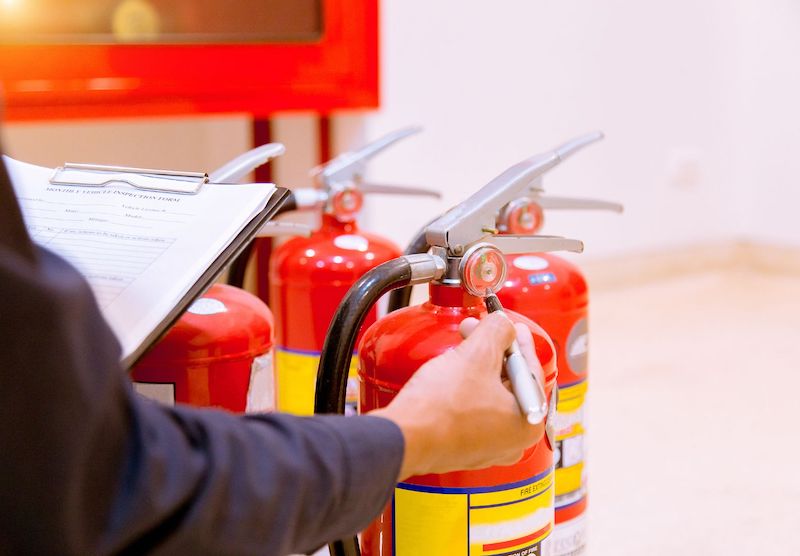
According to UK fire safety laws, your business must provide appropriate fire-fighting equipment. For the majority of businesses, this usually means that you’ll need to have a sufficient number of fire extinguishers on-site.
High-risk businesses, such as restaurants or chemical storage facilities may need additional equipment like hose reels and sprinklers for effective safety. All equipment must be maintained and in full working order, must be certified to industry standards, and must undergo annual maintenance tests.
Signage
Fire safety signage is essential in all business premises. It should direct people to firefighting equipment, emergency routes, and exits. Required signs include Fire Action Notices (detailing actions in case of fire) and Fire Extinguisher ID Signs (indicating the type and location of each extinguisher).
Fire exit signs are necessary in all but the smallest buildings with only one or two exits.
Alarms
Fire alarms are not required in all buildings, especially if they’re low-risk and very small, however, it may still be a good idea to have them installed as an extra precaution that could save lives.
Fire safety regulations require that all businesses have an appropriate fire detection system, which can either be manual or automatic depending on your business. Everybody in the building must be able to hear the alarm clearly and there needs to be an alarm call point at every point of exit.
Emergency Lighting
Emergency lighting is crucial to illuminate important areas during a fire if regular lighting fails. It’s required in buildings without sufficient natural light to allow people to safely exit and premises with dangerous areas like kitchens, or rooms larger than 60 square meters. Your emergency lights should be serviced annually as a minimum and should undergo a 3-hour test each year, where your normal lighting is turned off and the building runs on the emergency system for 3 hours.
Training And Drills
Fire drills and fire safety training are some of the most essential elements in keeping everybody in your organisation safe in the event of a fire as they will help everyone to act safely and effectively.
UK fire safety regulations require you to carry out annual refresher sessions on fire safety, regular fire drills, training updates whenever there’s a change to your building or layout, and to appoint fire marshals or wardens within the workforce.
Fire safety isn’t just about compliance; it saves lives. If you’re unsure about your building’s compliance or need assistance, consult the full regulations, or speak with a fire safety professional. If you have questions or need help achieving legal standards, contact us today.
