


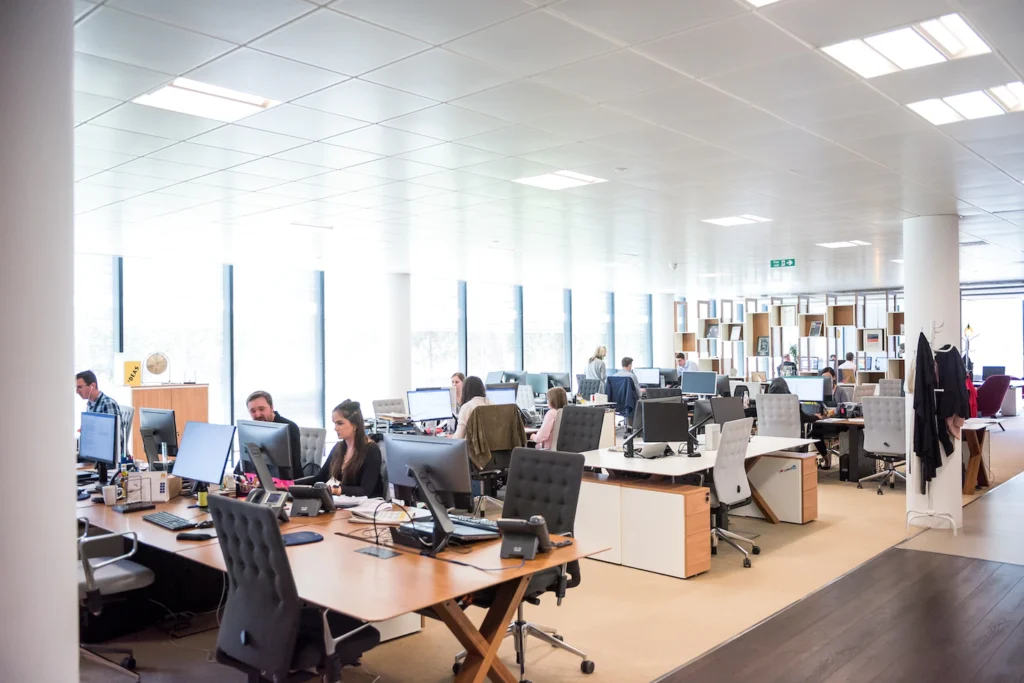
Particularly since the pandemic, and with the continued rise of technology, hybrid working has exploded, and for many organisations become a normal part of the workplace. As more and more businesses adopt this model to accommodate employee flexibility and job satisfaction, facilities management strategies must be able to keep up with the changing needs.
Flexibility and Adaptability
In a hybrid workplace, needs fluctuate daily, requiring flexible facilities management provisions. Adaptable facilities management teams and technology are crucial to effectively manage these changing demands.
From ensuring that the building is well-maintained to optimising energy efficiency and staff output, the needs are likely to change frequently depending on how many staff are working from home and how many are on-site. Adaptable facilities management teams and technology are crucial to effectively manage these changing demands.

Ensuring Physical Security
With employees splitting their time between home, office and site, maintaining physical security is extremely important in keeping the site safe for everyone.
More people are likely to be coming and going throughout the day and staff members could be taking mobile devices and laptops from the building to use from home. This creates additional needs for your security as you must make sure that those who need flexible access have it, whilst preventing unauthorised visitors from taking advantage.
It’s also important that you manage devices properly so that only those staff members with permission can take laptops or other devices that could contain confidential data, from the building. This could involve changing access control, improving surveillance, and introducing security guards.
Optimising Space Utilisation
Efficient space utilisation is essential for both safety and productivity. Facilities management strategies should ensure that office spaces can accommodate varying staff numbers comfortably while maintaining safety standards. This may involve adjusting layouts and ensuring proper distancing measures.
For example, many office spaces will need to make sure that there is enough space for everyone to work in on busier days without overloading sockets or causing staff to work uncomfortably, whilst allowing them to still work together and communicate properly when the office is emptier and more spread out.
Cleaning & Sanitisation
Keeping your work environment clean is essential for staff wellbeing and minimising illness throughout the workforce. Whilst this has always been the case, hybrid working means that you may need to reinforce and refocus your existing cleaning strategy to deal with the potential increases in germs.
With many people working from home with pets or children who are in school every day, the risk of passing on more germs and allergens increases. It’s therefore important that surfaces, desks, chairs, and communal spaces are cleaned frequently and thoroughly so that these potentially harmful substances are removed from the workplace, keeping staff happy and healthy!
As businesses continue to embrace hybrid working, facilities management must adapt to maintain efficiency, safety, and security. Proactive and flexible FM teams are essential for meeting the evolving demands that a hybrid workplace creates.
